-

- 14 June 2026
- Comment (0)
Morocco and Brazil show quality, battle to 1-1 draw in World Cup opener
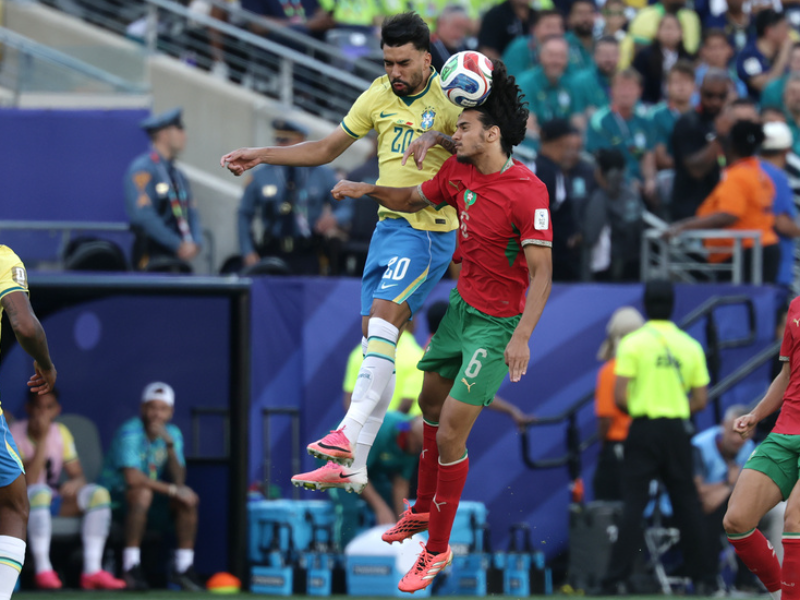
In an intense FIFA World Cup Group Stage clash, Brazil and Morocco shared the spoils with a 1-1 draw at the New York/New Jersey Stadium.
Morocco took an early lead in the 21st minute through a well-worked goal by Ilias Saibari, who firmly slotted into the net following precise build-up play.
Brazil responded deftly with Vinicius Junior netting the equalizer in the 32nd minute. His strike, a result of a fluid attacking move, rejuvenated the Brazilian side.
Despite enjoying 52 percent possession, Brazil struggled to convert opportunities into goals, registering five shots on target compared to Morocco's three.
The Brazilian defense, however, committed numerous fouls leading to free-kicks for Morocco and earning yellow cards for Casemiro and Roger Ibanez in quick succession before halftime.
Both teams actively utilized substitutions as the match progressed.
Brazil, a five-time World Cup champion, introduced key players like Lucas Paqueta and Bruno Guimaraes in hopes of a breakthrough, but Morocco's defense, buoyed by proficient goalkeeper Yassine Bounou, stood resilient.
The draw leaves both teams pondering missed chances to claim maximum points on a global stage, with Brazil reflecting on its 16 fouls and two bookings as areas for strategic improvement.
Brazil next faces Haiti on June 19 at Philadelphia Stadium. Morocco faces Scotland that same day in Boston.
About the Game
Welcome to the world of the FIFA World Cup, a global football tournament.
Football, also known as soccer in some countries, is a team sport played by two teams of 11 players each on an outdoor field. The main goal is to score more goals than the opposing team. A goal is scored when the ball is kicked into the opposing team's large net, called the goal.
Games last 90 minutes, divided into two halves of 45 minutes each, with a short break in between called halftime. Players use their feet to kick the ball, but they can also use their heads or other parts of the body, except their hands and arms.
Only the goalkeeper, who stays near the goal to try to stop shots, can use hands within a specific area called the penalty box. Some important terms you'll hear include "offside," which is when a player is in an illegal position closer to the opponent's goal than the ball and the second last opponent, and "fouls," which are rule violations leading to free kicks or penalty kicks, depending on where they occur.
The FIFA World Cup occurs every four years and is considered the most prestigious football competition in the world. In 2026, teams from around the globe compete for the title.
The tournament is structured with a group stage followed by knockout rounds. Initially, teams are divided into groups and each team plays against the others in its group. Teams earn points for each match: three points for a win, one for a draw, and none for a loss. The best teams advance to the knockout stage, where they compete in direct elimination matches until only one team remains as the champion.
The World Cup is exciting because it brings nations together in a celebration of culture and sport, showcasing the best talents and fostering international camaraderie.
Understanding these basics helps you follow the matches and enjoy the thrilling spectacle of the world’s most-watched sporting event.